How it works
Intake, bloodwork, triage, advising. Continuous.
Not an annual physical with a wellness app bolted on. A loop that catches a number when it moves, tells you what to do about it, and checks the right thing the right number of weeks later.
01
A fifteen-minute conversation, not a form.
The front door is your assistant. It asks about how you live, what you eat, how you sleep, what you're working toward, and what's already going on with your health. The conversation happens in chat, at your own pace. Most of what your clinician would ask in an hour, captured in fifteen minutes by an assistant that doesn't forget what you said.
02
Bring your bloodwork with you.
Upload the labs you already have: a PDF or a clear photo from any lab works, and your assistant reads every line. Panel ordering is on the way, with a Quest location near you or an at-home draw through a phlebotomy partner, a baseline of about a hundred biomarkers, and Focus add-on panels as part of the membership.
03
Results triaged into Flagged, Suboptimal, Strong.
Every marker lands in one of three tiers. Flagged means outside the lab's reference range: a real number to pay attention to. Suboptimal means in range but not functionally ideal, with the line drawn from research, not from what a lab considers normal. Strong is exactly that. No green checks for borderline values.
04
An interpretation drafted while you're still reading.
The moment results land, your assistant drafts a member-facing read on the panel: the headline, the markers worth focusing on, the next steps. Education, lab reads, and lifestyle direction land in real time; anything prescription-adjacent it flags for you to take to your own licensed clinician.
05
Recommendations on a separate surface.
Recommendations live in their own destination, not woven into the assistant's answers. Each one cites the specific results that motivated it. Supplements route to a commerce partner; peptide protocols route to a licensed pharmacy partner (the storefront you joined through), who runs the clinical evaluation. You decide what to act on. You pay the partner directly.
06
Re-tests on the right cadence.
If lipids land flagged, twelve weeks is the right interval to see whether what you changed has actually moved them. Thyroid pattern, eight weeks. Vitamins, twelve. The system queues those tests automatically and keeps the draw conditions consistent (same morning, fasted where it matters, same Quest location) so the numbers are actually comparable.
Focuses
What a Focus actually changes.
Activate one or more Focuses. Each one changes what your assistant tracks, which markers it weighs most heavily, and what it suggests testing next. Turn them on and off freely. Nothing here sits behind a paywall.
Flagship Focus
Fertility
Cycle data, AMH and the day-3 / day-21 hormone panel, optional active urine monitoring, longitudinal hormone trending. Built for women who want a longitudinal view, not a one-time test.
Longevity and cardiovascular
ApoB and Lipoprotein(a), fasting insulin and HOMA-IR, IGF-1, hormone optimization markers. The broad-appeal Focus that builds an evidence-based picture of long-term cardiometabolic trajectory.
Energy and sleep
Full thyroid pattern with reverse T3, the HPA-axis cortisol curve, active B12 and folate. For people who are tired and want to know why, with biomarkers that actually answer the question.
Allergies, gut health, and weight Focuses ship with basic toggles and content at launch, with deeper tools on the way.
Where the AI stops
It knows when to send you to a doctor.
We do not pretend the AI is a doctor. We also do not pretend a doctor needs to be involved every time you have a question about your numbers. The line we hold is specific.
Anything that involves a medication (start, stop, or change one), changes a care plan in a meaningful way, touches a pregnancy decision, or crosses into mental-health crisis territory, your assistant flags for you to take to your own licensed clinician. It does not prescribe or change your care plan on its own.
Education, lifestyle direction, supplement guidance, and reading your own data back to you in plain language: those happen in real time. You get less hedging, not more, because the system knows when to actually slow down.
Who shapes this
The clinical thinking has a name on it.
An assistant is only as good as the judgment behind it. Ours was not assembled by engineers guessing at what mattered. The depth in fertility, menopause, longevity, nutrition, and weight comes from a practicing physician who spent three decades in those rooms.
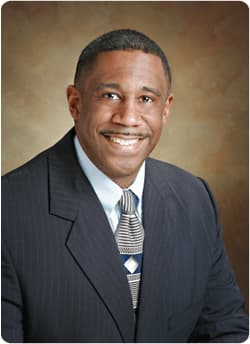
Dr. Calvin T. Wilson II, MD
Clinical Advisor
- Board-certified by the American Board of Obstetrics and Gynecology
- More than 30 years in clinical practice
- BS in Biomedical Engineering, Duke. MD, University of Pittsburgh.
- Practice focused on preventive medicine: hormone therapy, thyroid and metabolic health, weight, longevity
He sets the direction on what those Focuses track, which markers get weighed most heavily, and how the education around them reads. When the assistant explains why a hormone panel is drawn on a particular cycle day, that is not a model improvising. It is a position a doctor took.
To be exact about the boundary: he shapes the clinical content in his focus areas. He does not review your individual results, and he does not provide medical care through this app. Your own clinician stays your clinician, and the handoff described above is still the handoff.
Want to see it for yourself?
Invite-only while we build to launch. Common questions are on the FAQ.